 Insights
When deciding between a custom web portal vs off the shelf SaaS, the choice comes down to operational alignment and long-term cost. Pre-built SaaS offers immediate deployment and lower initial expenses, but locks your business into recurring seat licenses and rigid workflows.
A custom web portal requires a higher upfront investment but gives you complete data ownership, tailored operational workflows, and zero monthly user fees as your team expands.

Understanding the Fundamentals: SaaS Platforms vs Bespoke Portals
Off-the-shelf Software-as-a-Service (SaaS) platforms are mass-market digital products built to serve common operational needs across broad industries. They allow businesses to register an account, configure existing templates, and start managing tasks within hours.
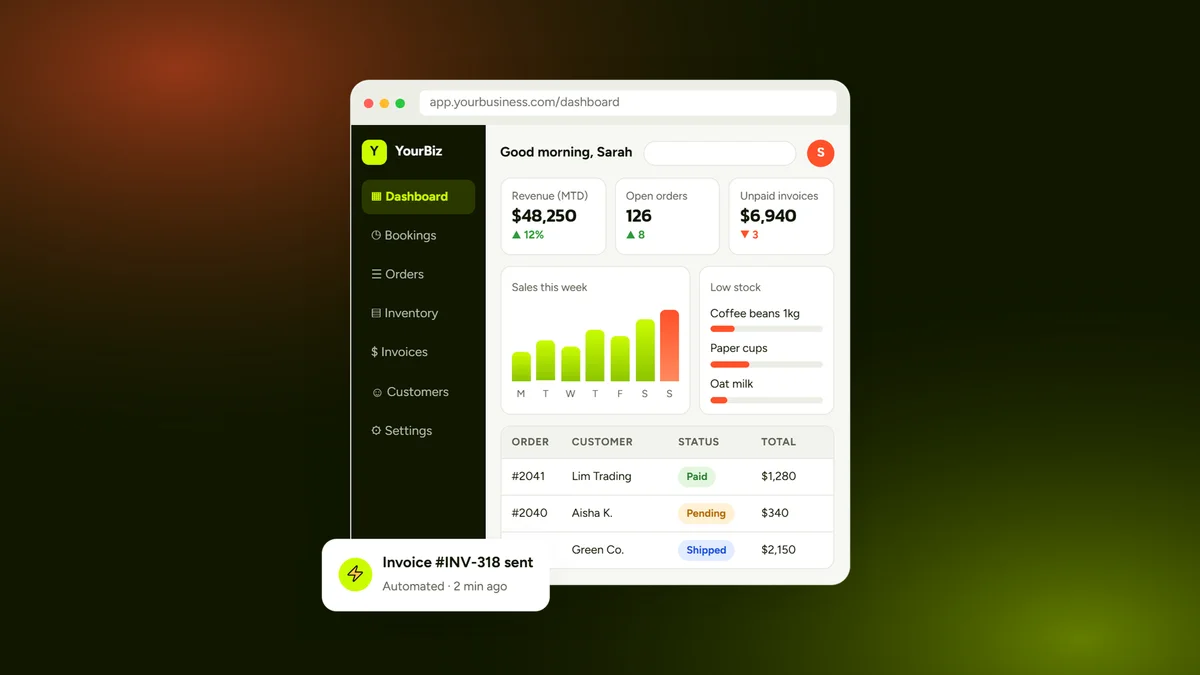
In contrast, a custom portal is a proprietary web application engineered precisely around your internal business operations, client touchpoints, and existing toolsets. It avoids bloated features you will never touch while integrating directly with your proprietary databases.
Deciding which route fits your organization requires balancing two distinct operational models:
- SaaS Subscription Model: You rent access to software hosted on vendor servers, paying recurring per-user or tiered monthly fees.
- Custom Web Infrastructure: You own the application codebase and infrastructure outright, paying only standard cloud hosting costs and on-demand maintenance.
For growing companies evaluating their operational tech stack, investing in tailored custom business systems often replaces dozens of conflicting subscriptions with a single, unified operations hub.
Related: custom business systems
The True Total Cost of Ownership: Upfront Capital vs Compounding Fees
Initial price tags can be deeply misleading. A commercial SaaS solution looks affordable at $49 to $199 per user each month, while custom software development requires dedicated upfront capital.
However, commercial software costs scale linearly with team growth. As your organization adds headcount, external contractors, and active client logins, recurring subscription tiers compound rapidly over three to five years.
Comparing Multi-Year Financial Trajectories
- Subscription Creep: A team of 30 paying $120 per user across three separate operational platforms spends over $129,000 in subscription fees every three years without gaining an asset.
- Capital Asset Creation: A custom portal acts as enterprise equity, amortizing its initial engineering cost into a durable digital asset that increases company valuation.
- Add-on Surprises: Pre-built platforms often charge steep tier upgrades for essential enterprise needs like API access, automated webhooks, audit logging, and custom roles.
Understanding these variables is easier when reviewing a detailed website and app development cost guide to see where development funds yield the highest operational return.
Related: website and app development cost guide

Workflow Efficiency and Custom Integrations
Standard SaaS platforms require your company to reshape its internal processes around rigid, predefined product menus. When your operational logic must conform to generic software rules, manual workarounds inevitably emerge across teams.
Staff members spend hours copying records between disparate systems, exporting CSV files, and duct-taping data through fragile third-party automation tools. These operational bottlenecks frustrate team members and produce frequent data discrepancies.
A custom solution flips this dynamic entirely by matching your exact operating procedures:
- Precision Workflows: Dashboards and tracking pipelines mirror your team's real day-to-day steps, minimizing onboarding curves and human entry mistakes.
- Unified Data Pipelines: Direct database architecture allows real-time data syncs across inventory, CRM, client portals, and billing systems without middleman plugins.
- Distinct User Roles: Granular permission matrices ensure vendors, field agents, executives, and clients see only the data and interface views they require.
Modern web development enables businesses to centralize these touchpoints into streamlined, accessible web portals that run reliably across desktop and mobile browsers alike.
Related: web development
Scalability, Data Control, and Security Compliance
When you operate inside a shared multi-tenant SaaS environment, your operational data lives within a third-party vendor's closed database. You remain vulnerable to platform outages, sudden policy revisions, vendor price hikes, and unexpected feature deprecations.
If a vendor decides to sunset an integration or double its tier pricing, your business faces an expensive migration scramble. You cannot pause your daily operations while searching for another temporary software fix.
Building a proprietary system secures strategic autonomy and technical durability:
- Absolute Data Ownership: Maintain complete sovereignty over sensitive company data, client profiles, proprietary records, and transaction histories.
- Bespoke Compliance: Configure server-level encryption, SOC-2 protocols, HIPAA controls, or localized hosting environments tailored to your regulatory requirements.
- Feature Roadmap Control: You dictate when systems update, which features get built, and how tools evolve, eliminating the risk of unwelcome interface redesigns.
Partnering with an experienced team for services that combine strategic architecture with robust development guarantees your digital tools scale seamlessly alongside revenue growth.
Related: services

Decision Matrix: Which Path Fits Your Current Growth Stage?
Neither option is universally superior; your operational maturity, budget flexibility, and competitive advantages dictate the right direction. Evaluating your immediate needs against your five-year business plan prevents costly architectural mistakes.
When Off-the-Shelf SaaS Is Your Best Choice
- Early Market Validation: Early-stage startups testing initial product-market fit need speed and minimal capital outlays before institutionalizing workflows.
- Commodity Workflows: Routine operations like standard email marketing, payroll administration, or basic accounting rarely demand proprietary engineering.
- Limited Technical Support: Organizations without resources for dedicated infrastructure oversight benefit from vendor-managed server patches and automated backups.
When to Build a Custom Web Portal
- Core Competitive Differentiator: Your digital interface, customer onboarding experience, or operational speed is central to how you win business.
- Subscription Sprawl: Your business is currently balancing 8 to 15 fragmented subscription tools that fail to communicate reliably with one another.
- High User Volume: Your business model relies on hundreds of clients, partners, or field agents accessing your platform, making per-seat SaaS costs financially untenable.
When you are ready to eliminate disjointed operational bottlenecks and build tailored digital systems, the team at Webbily is here to help plan, engineer, and deploy your proprietary web platform. Schedule a conversation to explore your architecture options and build an asset tailored directly to your bottom line.
Frequently Asked Questions
Is a custom web portal more expensive than an off the shelf SaaS tool?
A custom web portal requires a higher initial development cost, but it carries far lower ongoing expenses. For businesses with growing teams or large client bases, custom software frequently proves more cost-effective over 3 to 5 years by eliminating compounding per-seat SaaS subscription fees.
How long does it take to develop a custom web portal?
Most custom web portals take between 8 and 20 weeks to design, develop, and launch depending on project complexity and required integrations. Simpler minimum viable portals can launch in under two months, whereas commercial SaaS platforms can be deployed in days.
Can I migrate my data from off the shelf SaaS to a custom web portal later?
Yes, nearly all major SaaS platforms allow you to export operational data via CSV files, JSON packages, or automated REST APIs. An experienced web development team can sanitize and import this historical information directly into your custom database structure.
What happens if our business processes change after building a custom portal?
Custom web portals are built modularly, allowing developers to modify existing features, add database fields, or introduce new automated workflows whenever your business evolves. Unlike SaaS tools where you must wait for vendor updates, you control the development roadmap.
What ongoing maintenance is required for a custom web portal?
Ongoing maintenance involves secure cloud hosting, routine database backups, software dependency updates, and periodic performance checks. Most businesses budget a modest monthly or quarterly retainer to keep their infrastructure updated, performant, and secure.
Learn more at webbily.com.